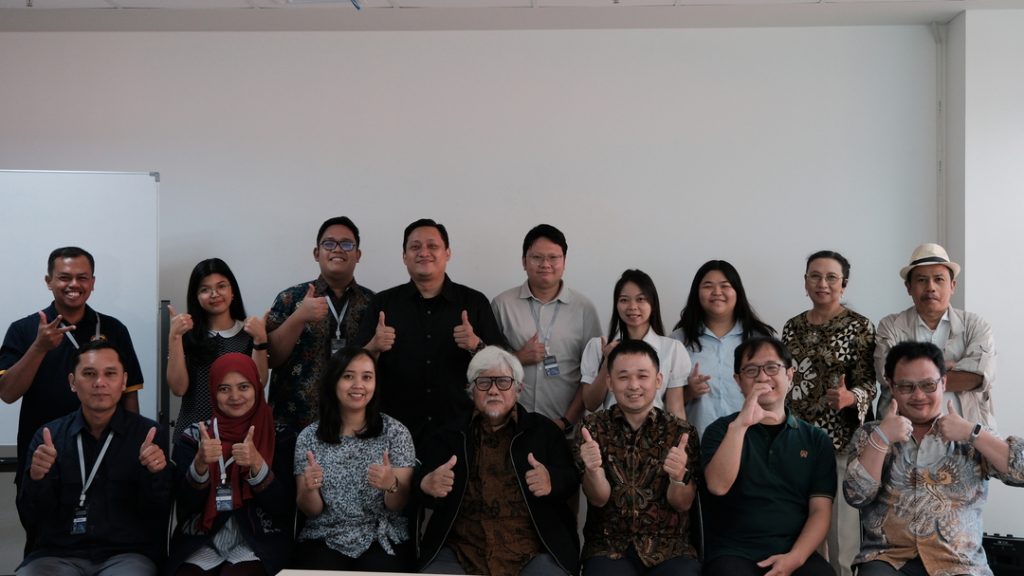

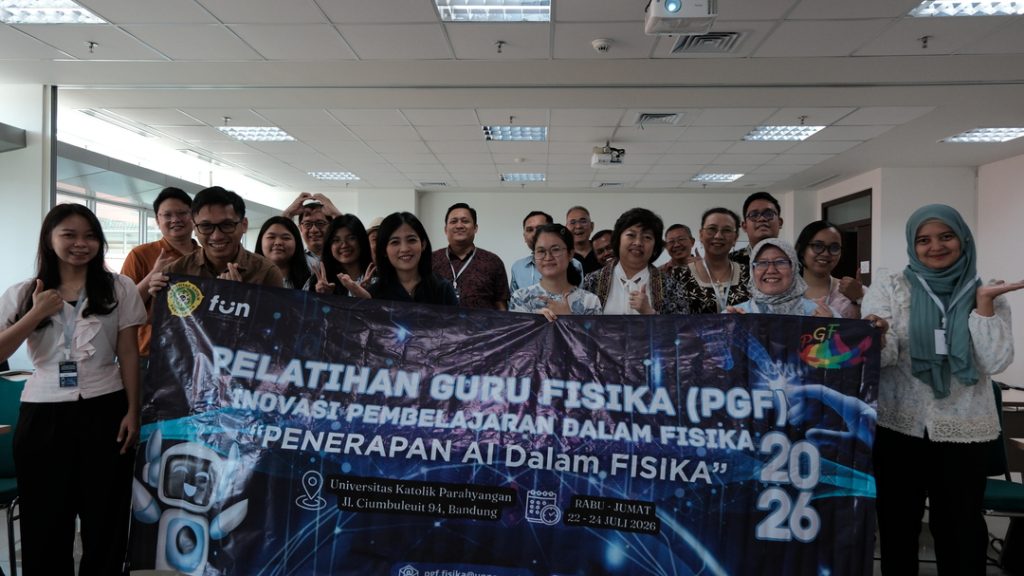
Bandung, July 24, 2026 – The Physics Study Program of Parahyangan Catholic University (UNPAR) successfully hosted the Physics Teachers Training (PGF) 2026, held from July 22–24, 2026. Carrying the theme “Innovation in Physics Education: The Application of Artificial Intelligence in Physics,” the event served as a platform for physics teachers to broaden their perspectives and enhance their competencies in utilizing Artificial Intelligence (AI) technologies in the teaching and learning process.
The training program brought together physics teachers from various secondary schools across West Java, Central Java, and East Java, all of whom share a commitment to continuously innovating in response to the challenges of education in the digital era. Through this program, participants had the opportunity to learn about the latest developments in AI technology and its applications in creating more interactive, effective, and relevant physics learning experiences for today’s generation.
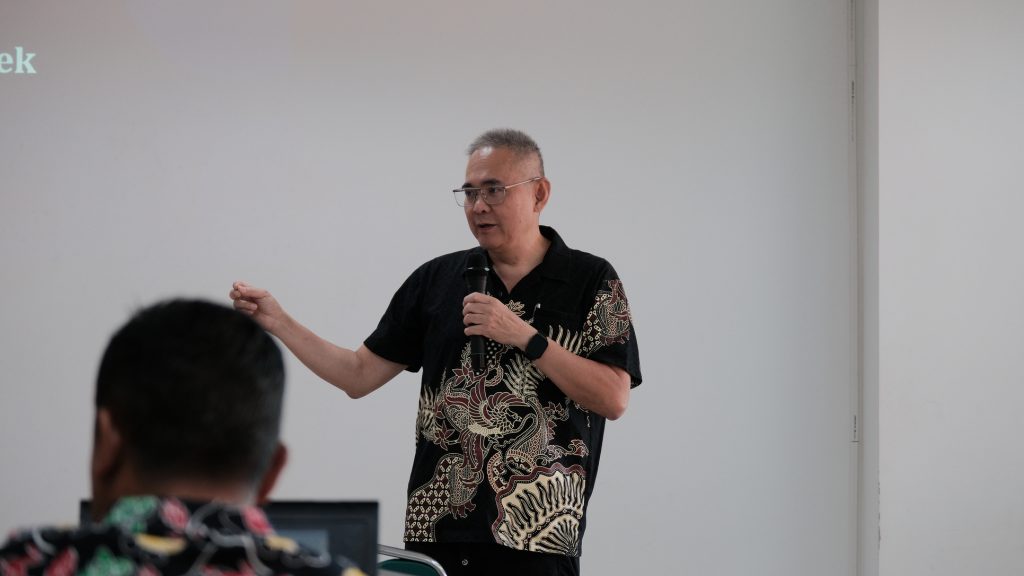
Over the course of three days, participants attended a series of seminars, discussions, and hands-on workshops led by experienced experts in education, science, and technology. The event featured four distinguished speakers: Reinard Primulando, Ph.D., Paulus C. Tjiang, Ph.D., Drs. Janto V. Sulungbudi, and Philips N. Gunawidjaja, Ph.D. Each speaker shared valuable insights, experiences, and best practices regarding the integration of AI into physics education.


A wide range of engaging topics was explored throughout the training, including an introduction to artificial intelligence technologies, the use of AI as a teaching aid, the development of AI-assisted instructional materials, and the utilization of various digital platforms to enhance creativity and effectiveness in the classroom. Participants were also encouraged to explore how AI can support assessment design, learning simulations, physics concept visualization, and the development of more engaging educational media for students.
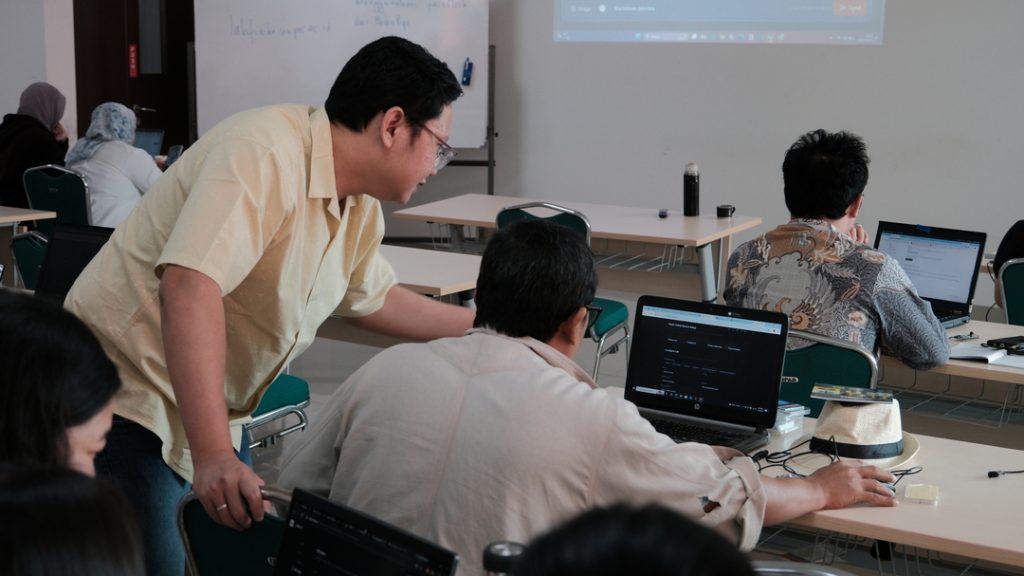
In addition to gaining theoretical knowledge, participants took part in practical sessions that allowed them to directly experience a variety of AI applications and tools that can be implemented in the classroom. Through this hands-on approach, teachers not only developed an understanding of AI concepts but also acquired practical skills that can be immediately applied in their respective schools.
Participants demonstrated remarkable enthusiasm throughout the event. Active discussions, the exchange of teaching experiences, and the emergence of innovative ideas highlighted the strong interest among teachers in continuously improving their teaching methods to keep pace with technological advancements. The training also provided a collaborative environment where educators from different regions could share inspiration and best practices in physics education.
Through the organization of PGF 2026, the Physics Study Program at UNPAR reaffirmed its commitment to supporting the advancement of science education in Indonesia. In an era marked by rapid technological development, teachers play a strategic role in preparing future generations who not only understand scientific concepts but are also capable of using technology wisely and productively.
It is hoped that the knowledge and skills acquired during this program will empower participants to create more innovative, creative, and meaningful physics learning experiences. Through the theme “Innovation in Physics Education: The Application of Artificial Intelligence in Physics,” PGF 2026 represents a significant step toward transforming physics education in ways that align with technological progress and the demands of 21st-century learning.