


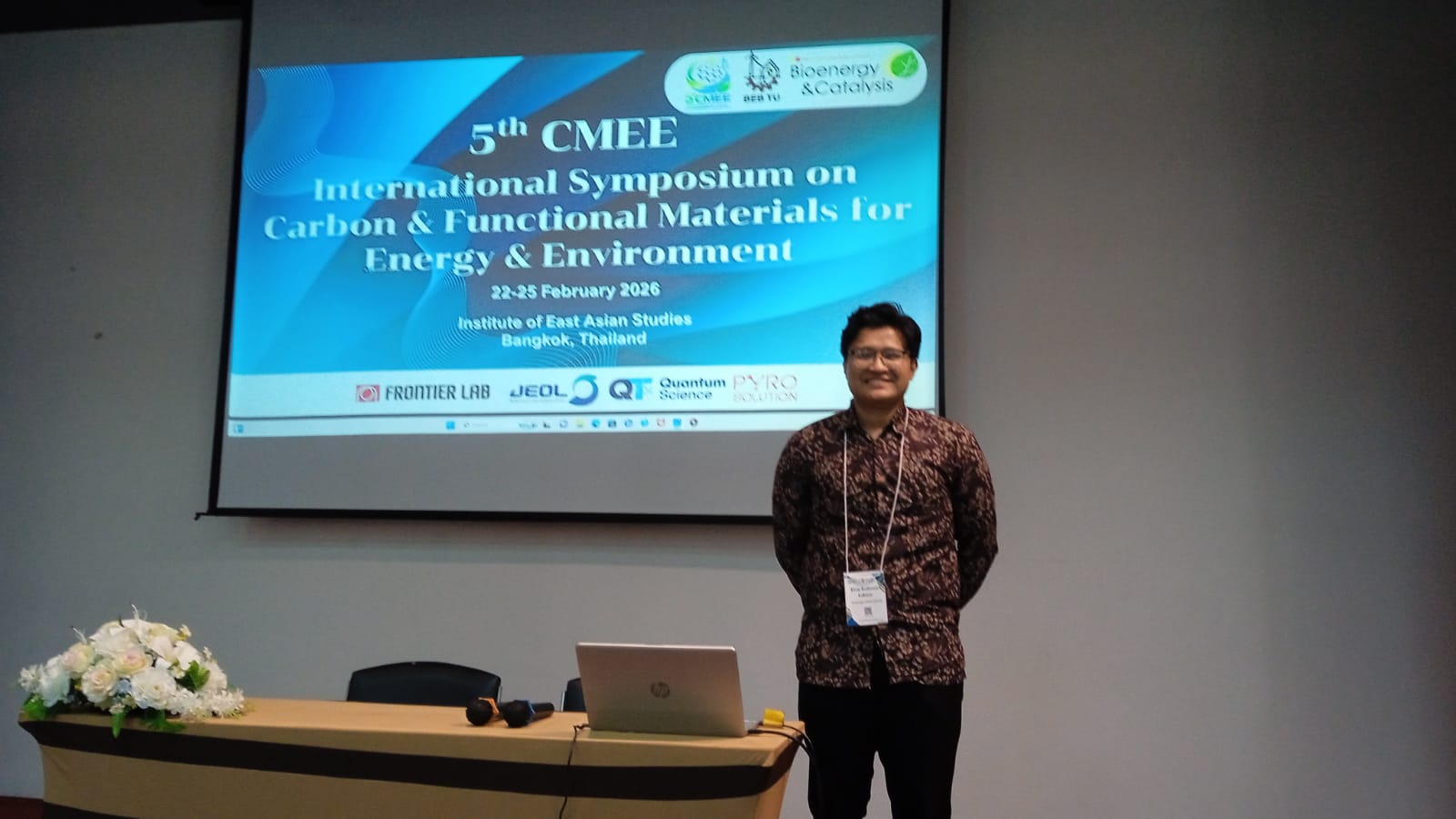
Elroy Anderson, a Physics student from the class of 2022, has gained valuable international experience by presenting his research at the International Symposium on Carbon & Functional Materials for Energy & Environment (CMEE 2026) held in Thailand on February 22–25, 2026. During the conference, Elroy presented his research titled “Nitrogen Doping-Induced Activity Modulation in Carbon Black and Graphene Oxide for Alkaline Oxygen Reduction Reaction.” This research focuses on the development of carbon-based materials modified through nitrogen doping to enhance the activity of the oxygen reduction reaction under alkaline conditions, which holds significant potential for the advancement of energy and environmental technologies.
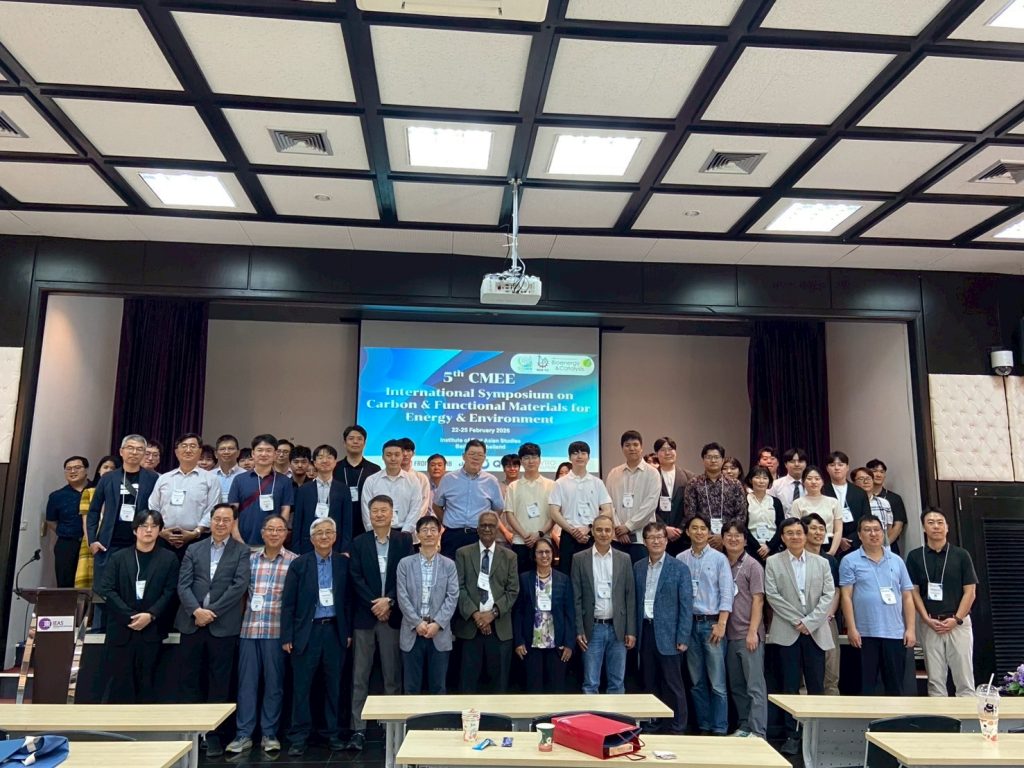
Elroy’s participation in the international conference was closely related to the research he conducted during the Merdeka Belajar Kampus Merdeka (MBKM) program at the National Research and Innovation Agency (BRIN). As part of the Advanced Physics Project course conversion, the research outcomes were required to be presented at scientific forums, either at national or international conferences. Since most conferences are typically held in the middle of the year, while Elroy aimed to graduate on time within four years, this international conference held earlier in the year became a suitable choice. In addition to the timing, the conference was selected because of its relatively close location and its consistent organization, having reached its fifth edition. Encouragement from his academic supervisor, Elok Fidiani,Ph.D, also played an important role in motivating him to participate in an international conference so that his research could receive broader feedback from experts in the field.
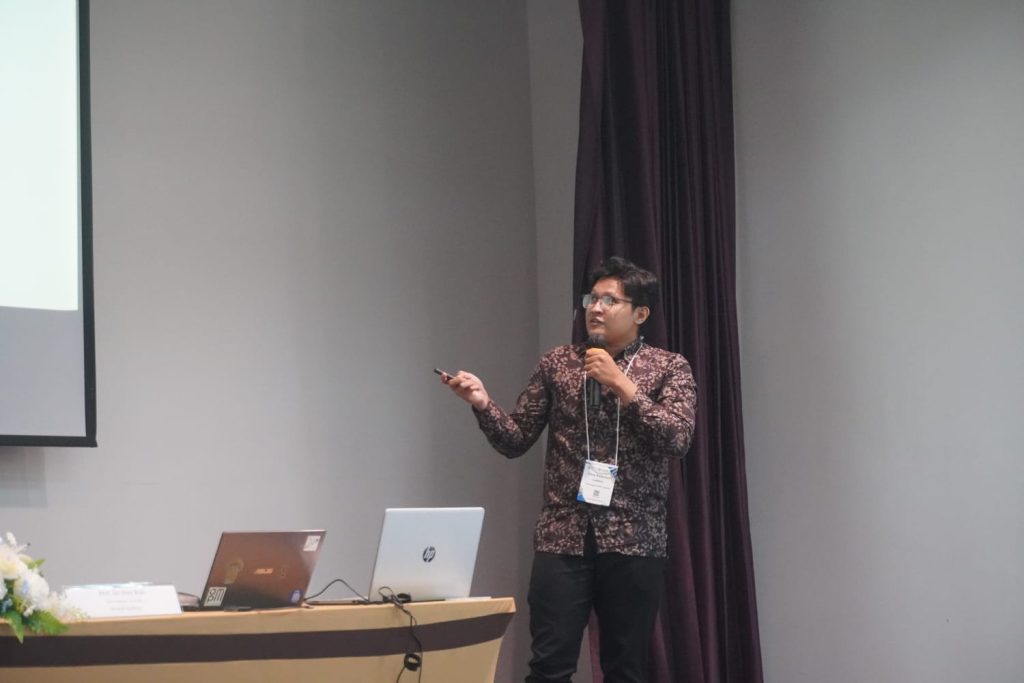
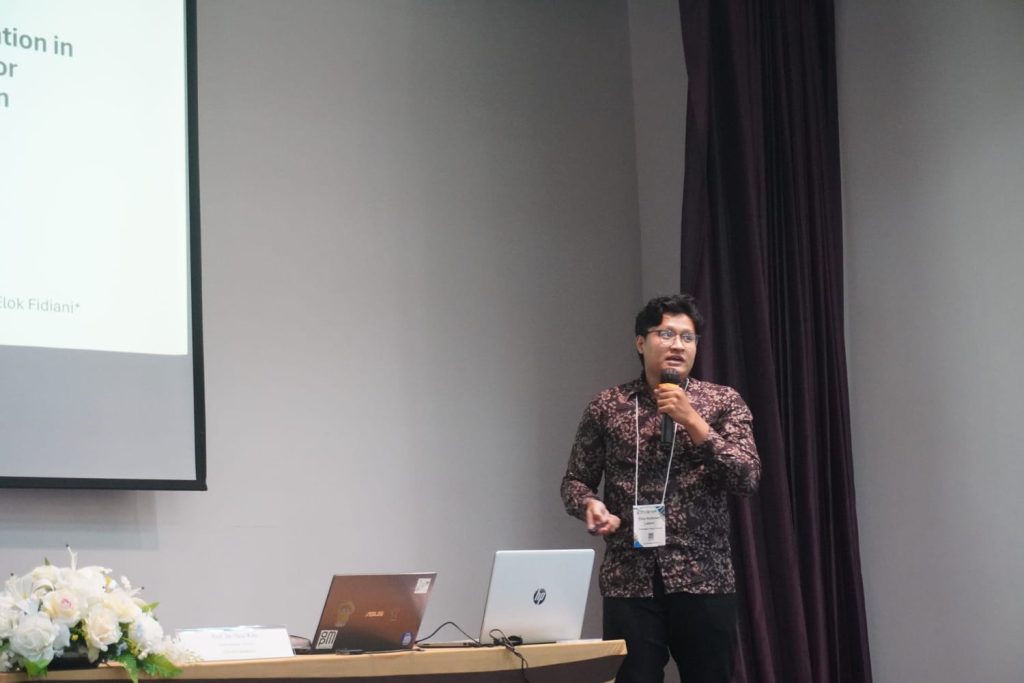
Through this conference, Elroy gained new insights into the development of carbon material research and its functionalization for energy and environmental applications. The scientific forum also provided an opportunity to learn about the direction of global research trends and to evaluate whether his research aligns with current global needs and challenges. Furthermore, the conference allowed him to connect with researchers from various countries who share similar interests in carbon-based materials.
Presenting his research in an international forum was both a memorable and challenging experience. It was the first time Elroy presented his research in English before an audience consisting mostly of experts in their respective fields. Although he initially felt nervous before the presentation, he remained focused on delivering his material as clearly as possible. His confidence stemmed from his belief in the quality of the research he had conducted. From this experience, Elroy also realized the importance of having a deep understanding of every aspect of the research to ensure that the presentation can be delivered more confidently and comprehensively.
Preparing for the conference also involved several challenges. One of the main challenges was developing a presentation narrative that was coherent, structured, and engaging. Although the conference was attended by experts, not all participants shared the same research background. Therefore, the material had to be presented in a way that could still be understood by a broader audience. The introduction section alone underwent several revisions after receiving feedback from his supervisor, fellow researchers, and fellow students. From this process, Elroy learned that the ability to construct scientific storytelling is an essential skill for researchers so that their ideas and research findings can be effectively communicated to the audience.
In addition to challenges in preparing the material, there were also technical challenges during the conference, such as a malfunctioning presentation pointer, issues with the HDMI cable, and a change in the presentation schedule because several participants in the session had not yet arrived. As a result, Elroy had to present his research earlier than originally scheduled. Another challenge was adapting to the international environment without any other participants from Indonesia. Nevertheless, this experience provided valuable lessons on how researchers from different countries present characterization results, highlight key points in their studies, and apply various methodological approaches in their research.
Based on his experience, Elroy shared several suggestions for students who wish to participate in international conferences. One of them is to be brave in trying new opportunities and to seek conferences that encourage academic growth. It is also important to carefully plan the conference timeline and prepare registration and funding documents early, as the funding application process at universities often takes a considerable amount of time. Travel documents such as passports, arrival cards, and proof of funding should also be prepared carefully to ensure a smooth administrative process.
Equally important is preparing the presentation materials as thoroughly as possible. The narrative should flow well and be understandable not only to experts but also to audiences from different academic backgrounds. Technical preparation, such as bringing backup copies of the presentation, a flash drive, and other supporting devices, can also help anticipate potential technical issues during the presentation.
Ultimately, the key to presenting research effectively is to have a deep understanding of the work being conducted, so that it can be explained in a simple yet scientifically sound manner to anyone who listens.